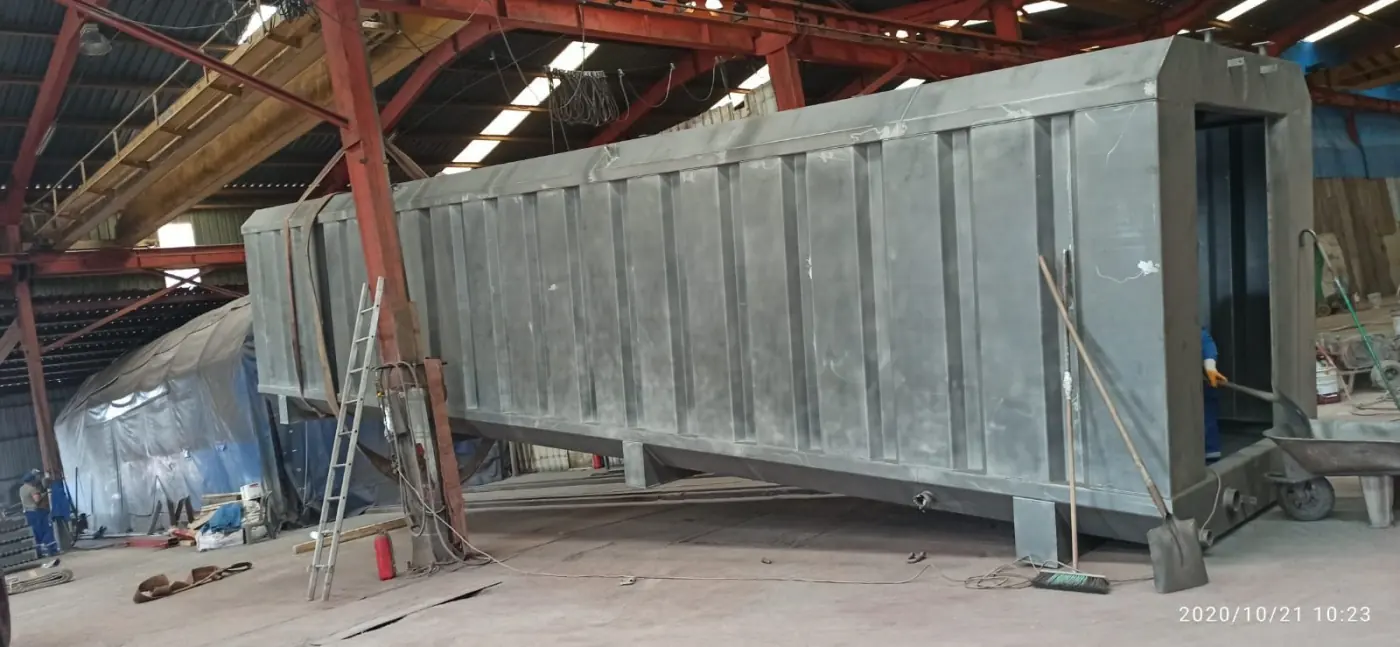
Blast rooms: parts up to 14 metres
Our two manual blast rooms measuring 5000 × 5000 × 14000 mm allow large and complex parts to be blasted in a controlled environment, independent of the weather. 15 overhead cranes handle heavy parts safely.
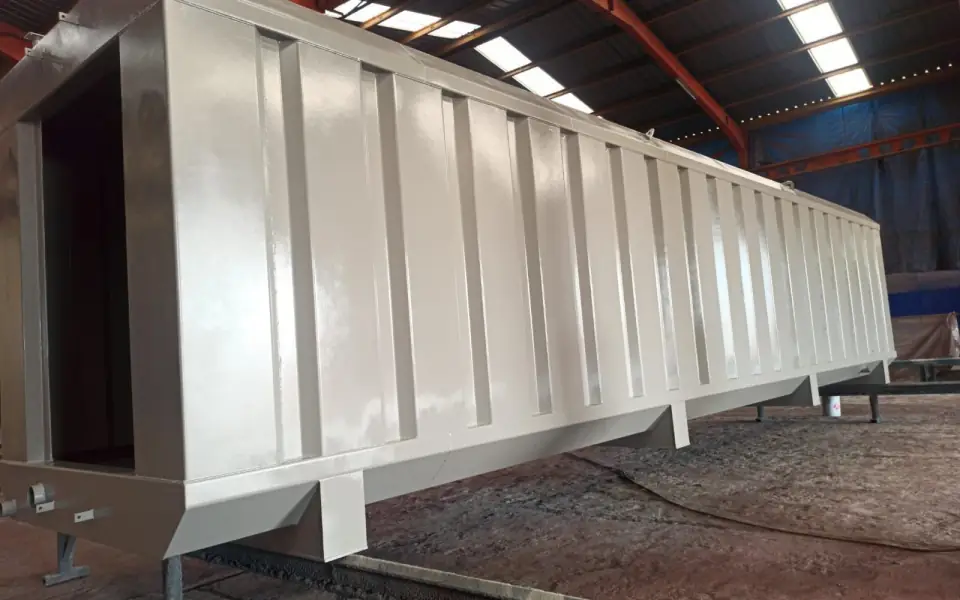
Surface preparation
Surface preparation to ISO 8501-1 with the largest-inlet tunnel shot blaster built in Türkiye and 14-metre blast rooms.
Steel rusts when exposed to moisture and air. Abrasive blasting removes oil, dirt, rust, mill scale and old paint from the metal surface with certified abrasives and creates the surface profile the coating needs to adhere.
Properly executed blasting directly determines the life of the coating system and therefore of the steel. We create the surface profile to the targeted micron depth in accordance with ISO 8503-2 and verify it with a digital profile gauge.
3000 × 1800 mm inlet. Designed and built by Mechanical Engineer Aziz Abuş; the domestically built blasting machine with the largest inlet in Türkiye. Blasts the heaviest sections and large structures uniformly in a single pass.
2000 × 1000 mm inlet; for sections, plates and series parts.
5000 × 5000 × 14000 mm; parts up to 14 metres long.
Low-pressure precision blasting for hot-dip galvanized materials.
On-site blasting with 4 high-pressure compressors.
Steel shot, steel grit, silica, quartz, basalt and glass beads.
Engineering highlight
Designed and built by our Authorised Representative, Mechanical Engineer Aziz Abuş, this machine has a 3000 × 1800 mm inlet, the largest of any domestically built blasting machine in Türkiye. It blasts the heaviest steel sections and large structures uniformly in a single pass.
Our blasting facilitiesISO 8501-1
The required grade depends on the coating manufacturer’s specification and the service environment. We blast to Sa 1, Sa 2, Sa 2½ and Sa 3.
| Grade | Definition | Surface condition |
|---|---|---|
| Sa 1 | Light blast cleaning | Loose mill scale, rust, paint and foreign matter are removed. |
| Sa 2 | Thorough blast cleaning | Most mill scale, rust and paint are removed; any residue is firmly adherent. |
| Sa 2½ | Very thorough blast cleaning | Only slight stains or shadows may remain. The most frequently specified grade for industrial coating systems. |
| Sa 3 | Blast cleaning to visually clean steel | The surface is completely clean with a uniform metallic colour; required for tank linings and heavy-duty coatings. |
Our two manual blast rooms measuring 5000 × 5000 × 14000 mm allow large and complex parts to be blasted in a controlled environment, independent of the weather. 15 overhead cranes handle heavy parts safely.
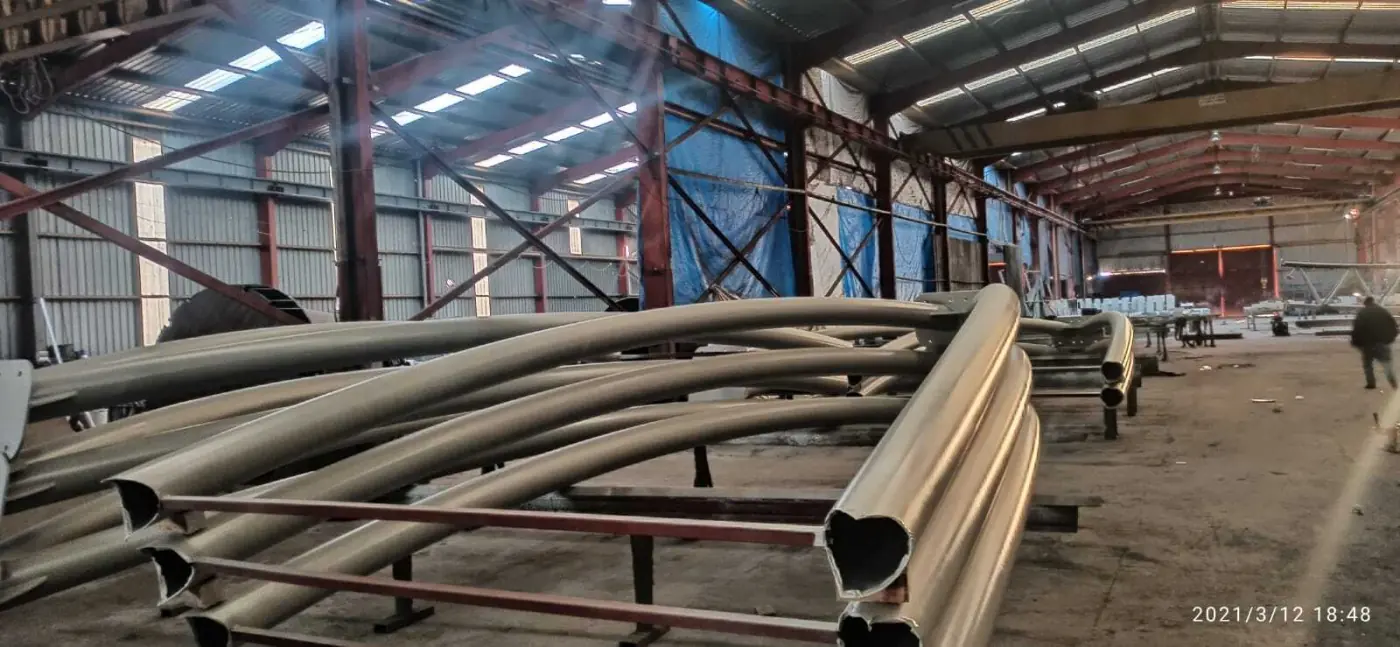
Our 18-turbine (3000 × 1800 mm) and 6-turbine (2000 × 1000 mm) tunnel machines blast sections, plates, pipes and structures at high speed with uniform, repeatable quality; shop primer can be applied to rolled sections and profiles.
Frequently asked questions
Abrasive blasting cleans oil, dirt, rust, mill scale and old paint from steel with abrasives propelled by blast wheels (turbines) or compressed air. It is carried out before painting and creates the surface profile the coating adheres to.
In tunnel (automatic) blasting, turbines throw the abrasive at the part while sections, plates and structures pass through on a conveyor, giving fast, uniform results. In a blast room an operator works with compressed air, which suits complex parts up to 14 metres long.
Sa 2½ is the “very thorough blast cleaning” grade of ISO 8501-1. No mill scale, rust or paint remains; only slight shadows or stains are acceptable. It is the grade most industrial coating systems require.
Steel shot, steel grit, silica, quartz, basalt and glass beads. The abrasive is chosen according to the material, the required cleanliness grade and the surface profile targeted under ISO 8503-2. All our abrasives are certified.
Blasted steel starts to rust again quickly when exposed to moisture, so the primer should be applied as soon as possible. Blasting and painting in the same plant under measured ambient conditions is a major advantage.
Send us the part dimensions, tonnage and required cleanliness grade and we will quickly propose the right solution and price.